
Automotive Window Tint in Columbus, OH: Film Types, Heat Rejection, UV Protection, and Installation Guide

Updated: Jun 17

Learn what to know before choosing automotive window tint for your vehicle.
Automotive window tint in Columbus, OH is not just about choosing the darkest shade or the film that looks best in a parking lot. The right film should match Ohio tint law, your comfort goals, your vehicle’s glass, and how much heat, glare, and UV protection you want day to day. For drivers in Columbus, Reynoldsburg, and across Central Ohio, that usually means comparing film type first and darkness second.
We see this often. One customer wants a darker look on a daily driver. Another wants less heat for a black leather interior that sits outside all afternoon. Someone else drives a newer SUV with factory privacy glass and thinks the rear windows are already “tinted,” even though privacy glass is not always the same as performance window film.
That is why a good tint conversation starts with how the vehicle is used.
What Automotive Window Tint Does for Columbus Drivers
Good window tint helps with four things most drivers notice right away: heat, glare, privacy, and interior protection.
Columbus summers can make a parked vehicle feel rough fast, especially if it sits outside near Easton, downtown, OSU, a work lot, or an apartment complex. Tint will not turn your vehicle into a refrigerator, but the right film can reduce the solar energy coming through the glass and make the cabin more comfortable.

Glare matters too. Anyone who drives I-70, I-71, I-270, SR-315, or US-33 during low-sun hours knows that glare can wear on your eyes. Tint also adds privacy and helps protect leather, vinyl, plastics, trim, and dashboards from sun exposure over time. For a deeper look at comfort and protection, Columbus Car Audio has already covered the benefits of professional window tint.
Automotive Window Tint Columbus OH Drivers Should Match With Ohio Law
Before picking a shade, check the legal side.
Ohio tint rules are based on visible light transmission, usually called VLT (Visible Light Transmission). A higher VLT number means more visible light passes through the glass. A lower VLT number means a darker shade.
Ohio’s current administrative rules for motor vehicle sunscreening material include light-transmission requirements for the windshield and windows. You can review the state language through the Ohio Administrative Code window tint rules, but here is the practical takeaway for most shoppers:

Vehicle area | General Ohio tint guidance |
Windshield | Must meet windshield light-transmission rules; the upper strip is limited by the AS-1 line or five inches from the top |
Front side windows | Commonly cited at 50% or more light transmittance |
Rear side/rear windows | More flexible than front side windows, but visibility and mirror requirements still matter |
Colors/materials | Avoid restricted colors or reflectorized materials |
Ask your installer to confirm current Ohio requirements before the film goes on the vehicle. Laws can change, and the front side windows are usually where drivers get into trouble. For more quick answers, read the common window tinting questions from Columbus drivers.
Window Tint Film Types: Dyed, Carbon, Ceramic, and More
Not all tint is built the same. A dark, low-cost dyed film may look private, but that does not mean it rejects heat like a better carbon or ceramic film.

Dyed window film is usually the entry-level choice. It gives the glass a darker look, helps with privacy, and reduces visible glare. It is practical when appearance and budget matter most, but it usually does not reject heat as well as higher-performance carbon or ceramic film.
Metalized window film uses metallic particles to reflect solar energy. It can perform well, but we are careful with it on modern vehicles because it can create signal interference with GPS, satellite radio, toll transponders, keyless entry, mobile devices, and other connected electronics.
Carbon window film is the strong middle ground. It usually offers better heat rejection and color stability than basic dyed film, while avoiding the signal concerns that can come with metalized film.
Ceramic window film is the premium comfort option. It uses ceramic technology to reject infrared heat while staying non-metalized, which makes it a good fit for newer vehicles. A lighter ceramic film can sometimes feel better than a darker basic film because it is built to reject more heat, not just reduce visible light.
Columbus: 2975A Morse Road, Columbus, OH 43231 | (614) 475-6695
Reynoldsburg: 6597 East Main Street, Reynoldsburg, OH 43068 | (614) 863-1067
SunTek Window Tint Options at Columbus Car Audio
Columbus Car Audio & Accessories installs SunTek automotive window tint films. The film level you choose should depend on how much comfort, appearance, and performance you want from the glass.
SunTek film level | Product | Best fit | What to know |
Standard Film | SunTek Standard Pro | Budget-friendly appearance and privacy | Dyed charcoal film with a matte, non-reflective finish |
Premium Film | SunTek Carbon | Balanced upgrade | Non-metal, nano-hybrid carbon film with a true black look |
Ultra Film | SunTek CXP | Daily drivers wanting stronger performance | Nano-hybrid carbon film with UV protection and a true black finish |
Ceramic IR Film | SunTek CIR | Premium comfort and signal clarity | Ceramic, non-metal construction with no electronic signal interference |
SunTek’s automotive specifications list performance by series and shade, including visible light transmission, total solar energy rejection, glare reduction, ultraviolet protection, IR Energy Rejection, and Selective IR Rejection. You can compare those numbers in the SunTek automotive window film specifications.
The simple version: Standard Pro is the appearance-minded starting point, Carbon and CXP are stronger non-metal options, and CIR Ceramic IR is the premium choice for heat rejection and modern vehicle compatibility. Drivers who want a broader film comparison can also review our guide to different window tint film options.
Heat Rejection Explained: VLT, IRR, IRER, and TSER
Heat rejection can get confusing because tint companies use several measurements.
VLT tells you how light or dark the film is. A 50% VLT film is lighter than a 20% VLT film because more visible light passes through it. VLT affects appearance, visibility, and legal compliance.
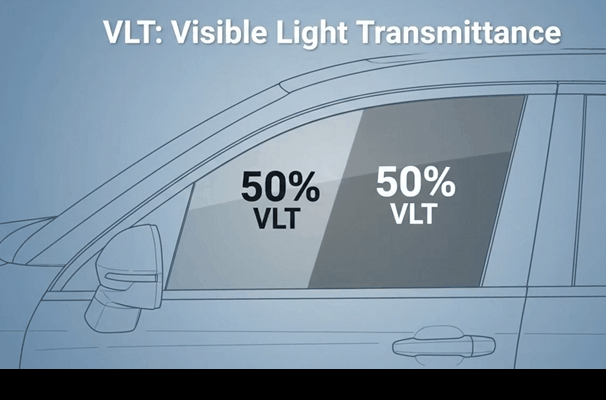
Infrared rejection focuses on infrared energy, the part of sunlight people often associate with the heat they feel on their skin. IR numbers are helpful, but they should not be the only number you compare because products may measure infrared performance differently.
TSER stands for total solar energy rejected. That is often the better number for real-world heat performance because it looks at more of the sun’s energy, not just one slice of it.
Darkness changes how the glass looks. Film technology changes how the tint performs.
UV Protection, Privacy Glass, and Interior Fade Reduction
UV protection is one reason tint makes sense even if you do not want very dark glass.
SunTek lists ultraviolet protection across its automotive film specifications, and many quality automotive films are designed to block 97% to more than 99% of UV rays depending on the product and shade. That helps protect seats, dashboards, trim, and leather from long-term sun exposure.
UV protection is not the same as heat rejection. A lighter film may still offer strong UV protection. A darker film may look private but not perform as well against heat if the film construction is basic.
The same idea applies to factory privacy glass. Many trucks and SUVs already have dark rear glass, but that is usually privacy glass, not necessarily performance tint. Some drivers add a lighter performance film over factory privacy glass after checking visibility, film compatibility, and legal requirements.
Ceramic Tint vs. Carbon Tint: Which One Should You Choose?
If comfort is the main goal, ceramic tint is usually the better choice.
Carbon tint still makes a lot of sense. It gives many drivers a clean look, good UV protection, and better performance than basic dyed film without stepping into the highest tier. For a daily driver in Columbus or Reynoldsburg, Carbon or CXP can be a smart balance.
But if the vehicle sits outside often, has a dark interior, or the driver wants the best heat rejection available from the options offered, CIR Ceramic IR deserves a close look.
How Professional Window Tint Installation Works
Tint is only as good as the film and the install behind it.
At Columbus Car Audio & Accessories, the process starts with the vehicle and the customer’s goals. Our team looks at the year, make, model, existing factory glass, desired appearance, legal shade options, budget, and how much heat rejection the driver wants.

Then the glass has to be inspected and cleaned. Scratches, old adhesive, stickers, defroster lines, dust, and contamination can all affect the final result. Film does not hide damaged glass.
The film is applied to the inside of the glass. Curved rear glass may need heat forming. Edges, fitment, water removal, and final inspection all matter because a rushed tint job can leave debris, uneven edges, peeling, or bubbles.
That is why professional window tint installation is usually worth it. DIY film may look cheaper up front, but poor prep, bad cuts, and weak edge work can turn into a redo.
If you want help choosing film and shade, Columbus Car Audio offers professional window tinting in Columbus and Reynoldsburg with trained installers, SunTek film options, manufacturer-limited lifetime warranties on listed films, and a lifetime workmanship guarantee on installs.
Curing Time and Aftercare
Fresh tint needs time to dry.
Right after installation, you may notice slight haze or small water pockets. That does not always mean something is wrong. Tint curing time depends on film type, temperature, humidity, sun exposure, and where the vehicle is parked.
In Central Ohio, humid summer days can slow drying. Cooler months can do the same. Give the film the time your installer recommends before cleaning the inside of the glass or rolling the windows down. Winter tint can still be done; you just need realistic expectations about curing, which is why we also explain how window tint behaves in colder weather.
Aftercare is simple: do not roll the windows down until the installer says it is safe, avoid cleaning new tint too soon, use a soft microfiber towel, and choose an ammonia-free glass cleaner unless the film manufacturer gives different instructions.
Ready to Choose the Right Tint?
The best automotive window tint Columbus OH drivers can choose is not simply the darkest legal shade. It is the film that fits the vehicle, Ohio law, comfort goals, visibility needs, and budget.
Columbus Car Audio & Accessories has served Central Ohio since 1978 and operates two local shops: Morse Road in Columbus and East Main Street in Reynoldsburg. Stop in or give us a call so our team can compare Standard Pro, Carbon, CXP, and CIR Ceramic IR options with you and help choose the right SunTek window tint for your vehicle.
Columbus: 2975A Morse Road, Columbus, OH 43231 | (614) 475-6695
Reynoldsburg: 6597 East Main Street, Reynoldsburg, OH 43068 | (614) 863-1067
FAQs About Automotive Window Tint in Columbus, OH
What is the best type of automotive window tint for my car?
For heat rejection and comfort, ceramic film is often the best choice. Carbon film is a strong mid-tier option, while dyed film is better for drivers who mainly want appearance and privacy.
What window tint percentage is legal in Ohio?
Ohio rules commonly require front side windows to allow 50% or more light through. Windshield rules, upper-strip limits, mirror requirements, and restricted materials also matter, so confirm current Ohio requirements before installation.
Does darker tint always block more heat?
No. Darker tint blocks more visible light, but heat rejection depends on film construction, TSER, infrared rejection, and glass type. A lighter ceramic film can outperform a darker basic dyed film.
Will window tint interfere with my phone, GPS, or keyless entry?
Metalized films can create signal concerns on some vehicles. Non-metal options like carbon and ceramic films are usually the safer choice for modern connected vehicles.


Honestly ceramic window tint makes a night and day difference when a vehicle sits out under direct sun for hours. Most people think tint is just for privacy or looks, but high heat rejection is low-key essential for commercial rigs. Fleet drivers sitting in traffic between jobs get baked. Outfitting heavy duty chevrolet work trucks with solid UV film keeps the cabin cool and saves the AC from wearing out
Lonestar stands out by making music creation accessible to everyone. You do not need any musical background to enjoy building catchy tracks and exploring the game's creative features.
This is a solid breakdown of window tint options, especially the comparison between carbon and ceramic. I've been debating which route to go for my SUV, and the point about ceramic rejecting more heat without affecting signal clarity is a big decider—I've had metalized films mess with my GPS before. The Ohio legal limits are also worth noting; I'm surprised how many people go too dark on front windows without realizing the 50% rule. For anyone running aftermarket electronics or mobile devices in their car, preserving signal strength is key. And if you're already upgrading your vehicle's electrical system with things like a 24v power inverter for charging gear, you'll want to make sure any tint doesn't interfere with those…
The snowrider gameplay is remarkably simple, making it easy for beginners to learn within minutes.
Geometry Arrow focuses entirely on its signature Wave mode, offering a simple yet highly challenging gameplay experience. Players control an arrow that moves in a zigzag pattern through increasingly difficult obstacle courses.